VERTUE
Masthead Sloop • Long keel w/trans. hung rudder • Built 1936
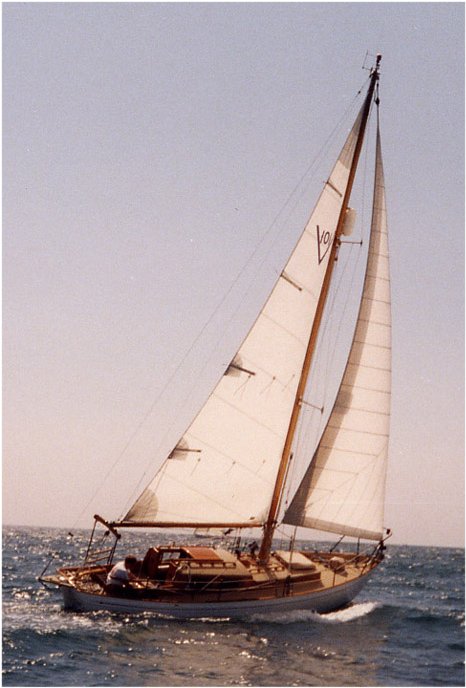
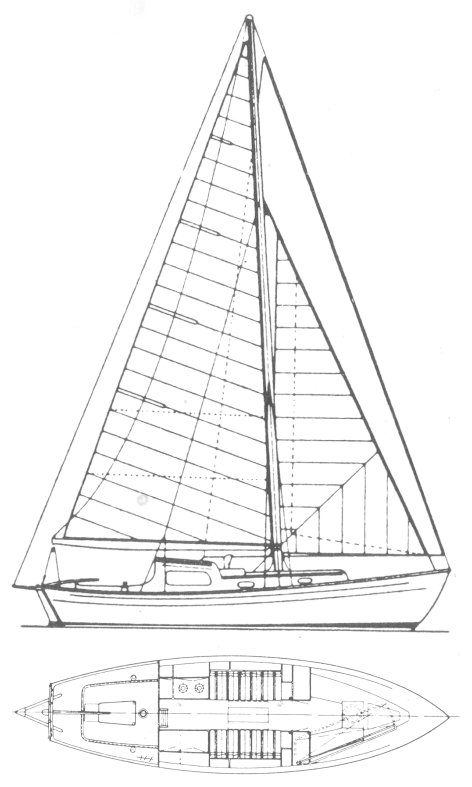
Dimensions
- LOA
- 25 ft
- LWL
- 21.5 ft
- Beam
- 7.16 ft
- Max Draft
- 4.42 ft
- Displacement
- 9,590 lbs
- Ballast
- 4,500 lbs
Performance Ratios
- Capsize Ratio ⓘ
- 1.35 (offshore safe)
- SA/D Ratio ⓘ
- 14.0
- D/L Ratio ⓘ
- 431
- Ballast Ratio ⓘ
- 46.9%
Sail Plan
- Sail Area
- 395 sq ft
Construction
- Hull Type
- Long keel w/trans. hung rudder
- Rig Type
- Masthead Sloop
- Hull Material
- Wood
- Ballast Type
- —
Production
- First Built
- 1936
- Last Built
- —
- Number Built
- 100
Notes: The forerunner of the VERTUE class was the ANDRILLOT, designed in 1936 (specs above). Ten ANDRILLOT sister ships were produced prior to the outbreak of war in 1939. It was the fifth boat, EPENETA, that would ultimately give the class it's name but not until 1945.\nOver the years, various alterations were made to the deck and rigging but the hulls remained relatively unchanged from the ANDRILLOT. Sail area for later boats were reported as 395 sqft (36.74 sqm) \nThe ANDRILLOT was a gaff cutter with a sail area of 366 sqft. (34.04 sqm). Changes to the rig and sail plan began immediately following ANDRILLOT from a gaff to a Bermudan rig to a "stutter" rig, a modified sloop and cutter. Other VERTUES were given a fractional rig. The most popular, however, was the masthead. \nMost VERTUES were built by different firms in England. Cheoy Lee built a few in the late 50''s and early 60''s. Some were built later in FG.\nIt is thought that approximately 100 have been built to this design.\nBeginning in the mid 1970's, VERTUES were produced using GRP and continue being built today by Bossom Boat Yard. See VERTUE II.\n
Designer
- Jack Laurent Giles (1901–1969)
Builders
- Bossoms Boatyard (1830)
- Cheoy Lee Shipyard (1870)
- Jouët (FRA) (1925–1970)
- Stebbings & Sons (UK) (1871–2000)
Class Associations
Related Boats
| Name | LOA (ft) | Year | Rig |
|---|---|---|---|
| VERTUE II | 25.62 | 1970 | Masthead Sloop |